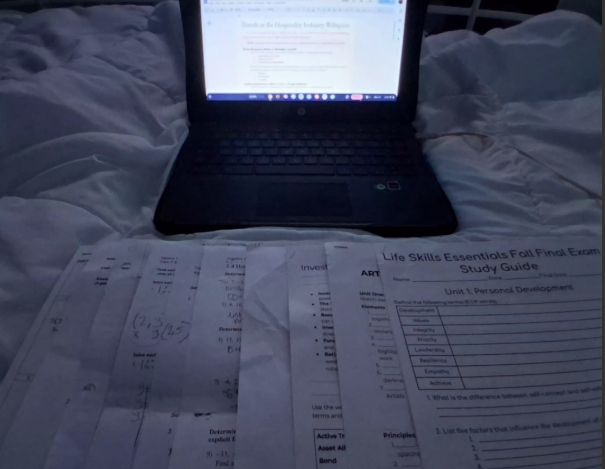
Students get so stressed and have anxiety during school. Homework plays a big role in those stress and anxiety levels. Homework is usually intended to help students learn, but it can have negative effects like depression, anxiety, stress, and more. After being at school for eight hours, Monday through Friday, students should be able to go home, rest, and do whatever they want or need to do. They should not have to spend their time on school assignments over the weekends. Imagine if students could just spend time doing the hobbies they like or with family and friends.
The Lafayette Times interviewed Maya Ashurst, a freshman at Lafayette High School, to discuss whether she thinks students shouldn’t have homework. Ashurst said, “I think students shouldn’t have homework because it takes up too much time and causes stress.” Ashurst told the interviewer, “Homework does stress students out because it makes students feel pressured to do things they may not understand and it also makes them do something they don’t have time to do.” This tells me her view on homework.
Ashurst continued, “Homework can help students out because it allows them to study and gain more knowledge but it is also very hurtful for a student because they may not understand the assignment and what needs to be done, and the student may not have any time to do it so they won’t be able to turn it in on time.” Then Ashurst answered, “I think if there were no homework allowed tomorrow, students would be happy and excited.” Ashurst answered with, “Homework does help students improve academically because it allows them to get a better understanding but homework also has many negative effects.”
Researchers also have a lot to say about why students shouldn’t have homework. According to Health Care Line, “When it came to stress, more than 70 percent of students said they were often or always stressed over schoolwork, with 56 percent listing homework as a primary stressor.”And according to Rego Park Counseling, “Too much homework can affect mental health. Students who spend more than two hours per night on homework often report higher stress levels, anxiety, and sleep problems. This can lead to physical health issues, burnout, and lower academic performance.”
Knowing the effects of stress is important to know because if you’re trying to talk to your kids or they seem off, then you could already know one reason why they are acting not like their usual selves. Helping Family Thrive says, “In addition to homework reducing play opportunities, it also leads to increased conflicts and stress for families.” This is also important to know because if you’re thinking that your kid is trying to distance themselves from
you or not as talkative, it’s most likely to do with the work that gets piled up and they’re just trying to go to their room and be by themselves to do it.
Kutest kids explained that, “Although Studies indicate that “homework can indeed improve student performance”.Research shows that high school students who engage with their homework consistently outperform around 69% of their peers who do not, as evidenced by standardized tests and overall grades.” This shows that there are some good things in doing homework, but according to California Learning Resource Network, “Homework often delays students’ bedtimes, reduces total sleep hours, which negatively impacts their sleep schedules.”
Lastly, Flexi Spot says, “with many families struggling with nightly homework battles, including serious arguments between parents and their children over homework.” These pieces of evidence show that having homework is not good for your students’ and or kids’ health, mentally and physically, and that those 3 o’clock meltdowns or tantrums aren’t your kids just “being bad,” it’s them finally knowing they’re in a safe place to finally breathe. They act that way because they know that they have even more work after those eight hours of being told what to do and how to do things.
In conclusion, the research and the interview with Maya Ashurst make it clear that homework often creates more stress than it improves learning. The research shows it cuts into sleep, free time, and well-being. A lot of students describe homework as overwhelming and unnecessary.